
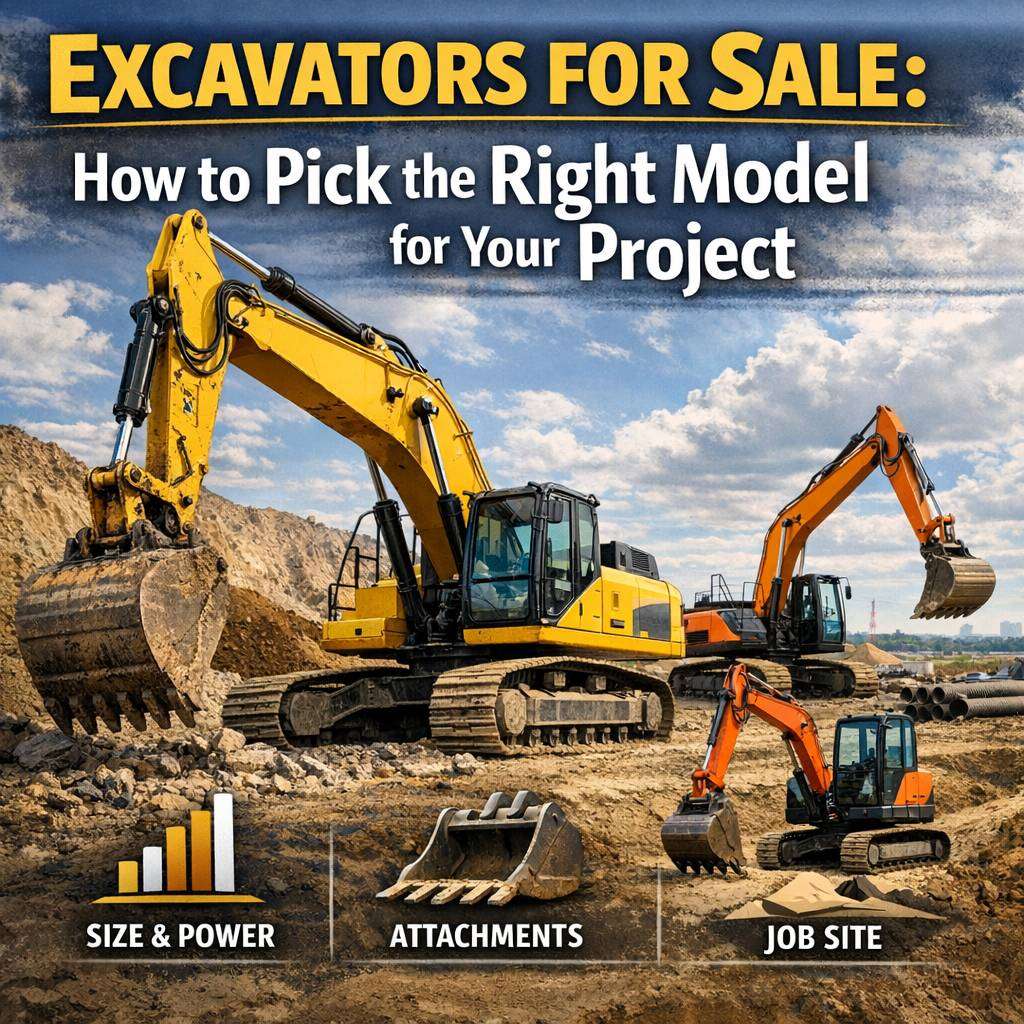
If you’re planning a construction or demolition project, selecting the right excavator is crucial to staying on schedule and on budget. A well-chosen machine will match your site constraints, the tasks at hand, and the long-term running costs. This guide, written from an industry perspective, walks you through the essential factors to consider when browsing excavators for sale. We’ll cover sizing and reach, power and hydraulics, mobility and stability, and the practical considerations that differentiate new models from second hand excavators. Whether you’re after a used mini excavator for restricted sites or a larger machine for heavy-duty work, these points will help you make an informed decision.
Sizing and Reach: Match the Machine to Your Site
The most common misstep is selecting a machine that is too large or too small for the job. Begin with site constraints: access width, weight limits on roads and foundations, overhead obstacles, and the precision required for trenching or grading. Digging depth, maximum reach, and dump height dictate boom and stick length. For urban sites, a compact footprint and tight tail swing can prevent costly site clearance or temporary roadblocks. For larger excavation tasks, a longer reach and higher breakout force can reduce cycles and increase productivity.
Consider the bucket work you’ll perform. Narrow parallel-edge buckets excel at trenching, while heavy rock buckets and hydraulic thumbs expand versatility for demolition or handling large boulders. When browsing excavators for sale, compare model variants with different boom lengths and various undercarriage options. If space is severely restricted, a “used mini excavator” may deliver the needed work envelope with less transport overhead.
Explore rugged machines built for demanding sites, from compact options to heavy excavators. Our inventory emphasizes reliability, low operating costs, and quick service, ensuring your crew stays productive. Flexible rental terms and dependable support accompany every purchase decision. Discover options with used and new models, detailed specs, and transparent pricing. Our team can tailor a package to your project size and location. For guidance, contact consultants today. excavators for sale
Discover durable excavators for sale that deliver power, efficiency, and reliability on demanding sites. Our selection covers compact to heavy models, offering high throughput, smooth controls, and low maintenance costs to help projects finish faster and safer. We tailor equipment packages to fit budgets, with transparent pricing, flexible rental terms, and rapid delivery to keep crews productive and on schedule to meet diverse project needs today. https://www.purplewave.com/landing/construction-equipment/excavators
Power, Hydraulics and Attachments
Hydraulic performance drives efficiency. Look for hydraulic flow (litres per minute) and pressure ratings that align with the attachments you intend to use. A higher flow rate enables quicker curl, tilt, and attachment operation—crucial when using breakers, grapples, or mulchers. Also inspect the controller type and joystick ergonomics; responsive controls reduce fatigue and improve accuracy on long shifts.
Think about the attachments you’ll rely on. In addition to buckets, plan for hydraulic breakers, grapples, thumbs, augers, or mulchers. Ensure the hydraulic system is compatible with the intended attachments and that auxiliary hydraulics are functional and easily operable. For buyers exploring second hand excavators, verify that the hydraulic hose routing and quick couplers are in good condition and that there are no leaks or abnormal noises during operation.
Mobility, Undercarriage and Stability
Undercarriage design and roadability influence transport costs and site access. Steel tracks offer durability on rough terrain, while rubber tracks reduce surface damage and improve stability on finished surfaces. For frequent site-to-site movement, review travel speeds, swing functionality, and gradeability. A machine with a robust swing ring and well-maintained rollers minimises downtime and costly repairs.
Stability is particularly important on sloped sites or when using heavy attachments. Check the track tension, front linkage pins, and boom/arm wear. If you’re considering larger excavators for sale, confirm that the machine’s weight and wheelbase won’t exceed site transport restrictions. Remember that a compact, well-maintained machine can often deliver superior uptime and lower lifecycle costs on smaller projects than a larger, less efficient unit.
https://www.yanceybros.com/used/machines/track-excavators/ Explore excavators for sale from trusted providers. Our selection offers tracked excavators with strong hydraulic power, advanced safety features, and efficient operation. Get flexible financing, reliable service, and nationwide delivery. Compare models, request quotes, and secure your next excavator for sale today from Yancey Bros. Your project deserves performance.
Operating Costs and Environmental Considerations
Running costs are a critical part of total ownership. Fuel efficiency depends on engine power, idle time, and the operator’s technique. Look for eco modes, programmable idle shutdown, and advanced engine management systems that optimise fuel use without compromising performance. In the UK, Stage V emissions standards affect engine choice and potential tax incentives or penalties, so factor in compliance when evaluating excavators for sale.
Maintenance and parts availability drive reliability. When reviewing second hand excavators, request service histories, recent major component replacements, and any retrofits or updates. A well-documented maintenance trail reduces risk and provides confidence in the machine’s remaining life. Don’t overlook training for operators and the availability of on-going support from the seller or dealer network, which can influence uptime and resale value.
What types of excavators are available for sale?
We offer a wide range of excavators for sale to suit every project: mini/excavators (1–5 tonnes), compact/midi models (5–10 tonnes), standard excavators (10–25 tonnes), and large-class machines (25+ tonnes). Options include crawler and wheeled configurations, long-reach variants, zero-tail-swing models, and a variety of attachments such as buckets, hydraulic thumbs, and quick couplers.
Should I buy new or used excavators for sale?
New excavators for sale come with full manufacturer warranties and the latest technology. Used excavators for sale are more budget-friendly and can offer excellent value when properly inspected. Both options come with service histories or inspection reports—our team can help you choose based on your budget, timeline, and job requirements.
How do I decide on the right size and reach for excavators for sale?
Consider:
- Job site space, access, and maneuverability
- Required dig depth and reach
- Lift capacity and stability on slopes
- Ground conditions and travel requirements
- Attachments you’ll useIf in doubt, our sales specialists can run through a quick sizing check based on your project specs.
What warranties and after-sales support are included with excavators for sale?
New excavators for sale usually include the manufacturer’s warranty and scheduled service plans. Used excavators for sale may come with limited warranties or optional extended warranties, plus access to our parts and service network for maintenance and repairs. We also offer maintenance packages and operator training where needed.
Do you offer financing or payment options for excavators for sale?
Yes. We provide flexible options such as hire purchase, financing through trusted lenders, and leasing. Our finance team can tailor a plan to your cash flow and project timeline, with transparent terms and clear total cost of ownership.
Do you deliver excavators for sale and what are the delivery terms?
We offer nationwide delivery and can arrange on-site setup, attachments, and basic operator familiarisation. Delivery timelines vary by model and location. Optional services include installation, commissioning, and on-site training for your team.
Can I trade in my current equipment when buying excavators for sale?
Absolutely. We evaluate your existing equipment and provide a trade-in value that can be used against the purchase price of your new or used excavator for sale. Trade-ins can simplify financing and reduce upfront costs.
What should I check when inspecting a used excavator for sale?
Key checks include:
- Engine and hydraulic system condition, leaks, and temperature/pressure readings
- Hour meter and maintenance/service history
- Undercarriage wear (tracks, rollers), pins, and bushings
- Condition of the boom, arm, and bucket linkage
- Leaks, corrosion, and cosmetic wear
- Functionality of operator controls, safety devices, and lights
- Correct operation of auxiliaries and attachments
- Documentation: service records, recent inspections, and any incident history
What safety and compliance features should I look for with excavators for sale?
Look for: ROPS/FOPS protection, ECM software for diagnostics, standard safety rails and mirrors, backup alarms, camera systems, stabilisers, and compliance with local safety regulations (such as CE/UKCA marks where applicable). Confirm that the machine has up-to-date service intervals and safety documentation.
How does renting relate to buying excavators for sale?
We offer flexible rental options as well as purchase. If you’re unsure about long-term need, renting can bridge your project timeline. We can also apply rental credits toward a future purchase, or convert an eligible rental into an outright purchase or a finance deal.
Used versus New: Making the Right Choice
Deciding between a new machine and a used one hinges on budget, expected utilisation, and risk tolerance. A used mini excavator can offer excellent value for small, repetitive tasks or constrained sites, but may carry higher maintenance needs or limited warranty. For longer-term projects with high utilisation, investing in a newer model or certified pre-owned machine can deliver better reliability and lower unexpected downtime.
When evaluating used options, inspect the machine’s hours, track wear, hydraulic seals, and the condition of the engine bay. Request a recent diagnostic printout and, if possible, arrange a test run to observe performance under load. If you’re considering “second hand excavators” for sale, seek transparency about history, previous approvals, and any known issues.
Practical Due Diligence: A Buyer’s Checklist
- Confirm weight, dimensions, and transportability to your site.
- Review hydraulic performance, auxiliary circuits, and attachment compatibility.
- Check undercarriage wear, track tension, and structural bores for signs of abuse.
- Inspect hoses, cylinders, and pins for leaks, cracks, or play.
- Verify service records, warranty status, and parts availability.
- Test run the machine to listen for unusual noises and observe hydraulic response.
- Compare total cost of ownership, including fuel, maintenance, transport, and depreciation.
Exploring excavators for sale with a clear understanding of these factors will help you select a model that aligns with your project’s demands, budget, and timeline. For those weighing “used mini excavator” options or considering “second hand excavators,” approaching the purchase with a structured evaluation will reduce risk and maximise uptime. If you’d like personalised advice or to review current stock, discuss your site specifics with a trusted supplier who can point you toward machines that truly fit your project.