
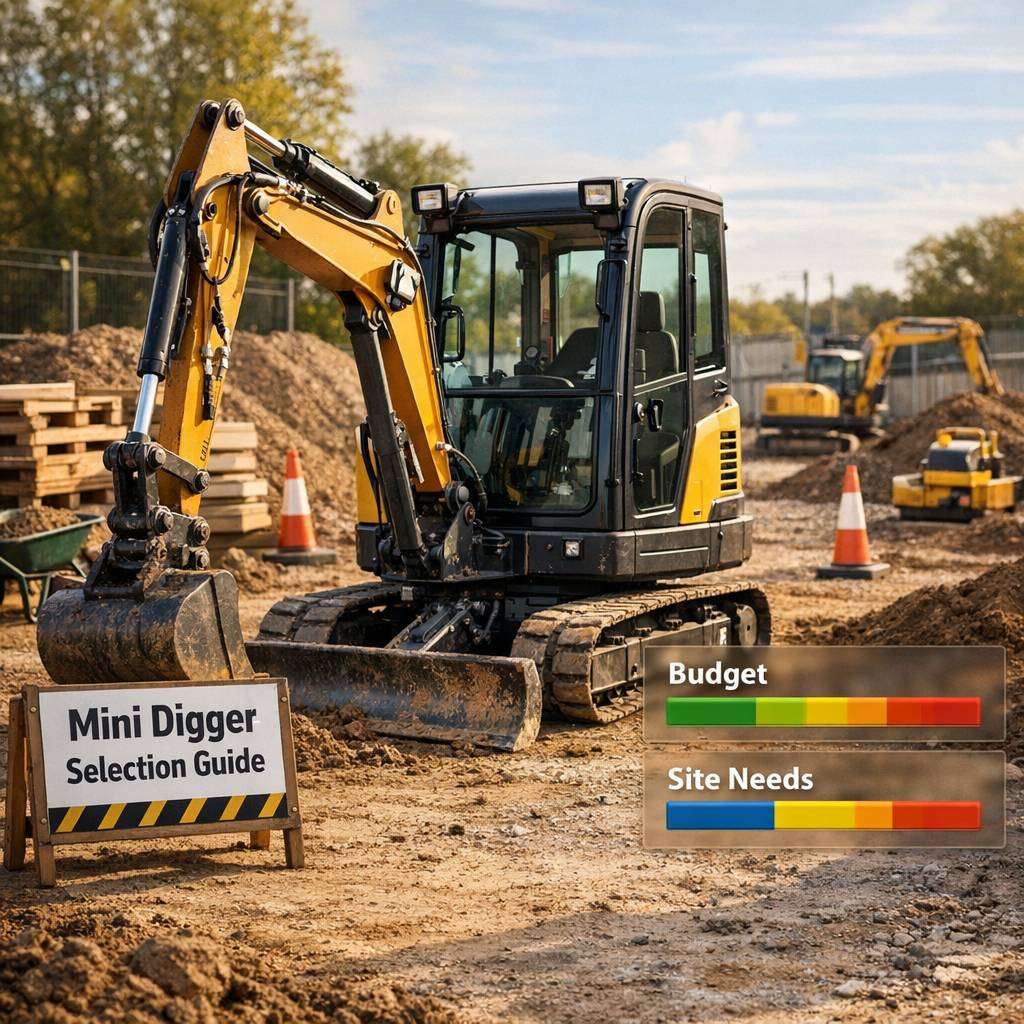
Mini diggers are a versatile solution for site access restrictions, confined layouts, and tasks that require precision. Whether you’re planning a small residential project or a compact commercial job, selecting the right machine can save time, protect finished surfaces, and keep your budget in check. This guide offers practical, expert-focused advice on choosing the right mini digger for your site and budget, with practical considerations and buying options including mini diggers for sale and used mini diggers.
Understand the scale and capabilities you need
Before evaluating machines, map out the specific tasks you expect the mini digger to perform. Common jobs include trenching, landscaping, utility installation, and debris removal. Identify the maximum digging depth, reach, and bucket size required. Remember that tighter spaces often demand narrower machines; for example, a compact 1.0 to 1.6 tonnes model may be ideal for indoors or between buildings, while a 2.5 to 3.5 tonnes machine provides more power for heavier digging while still remaining portable. Balancing power with manoeuvrability is key to avoiding over‑specifying or under‑sourcing a unit for your site.
Consider operating height and stability
On uneven ground or when working near existing structures, machine stability and height play a crucial role. Look at features such as retractable undercarriage, adjustable tracks, and symmetrical working radii. Some mini diggers offer adjustable digging radius and a smarter slew mechanism to help you maintain control in confined spaces. If you anticipate frequent repositioning or long hours, ergonomic considerations like operator comfort and visibility should influence your choice, as comfort can directly impact productivity.
Assess breakout force and digging depth
Different tasks demand different digging capacities. Breakout force (or breakout force on the bucket) and maximum digging depth determine the suitability for trenching or foundation work. For garden drainage, a shallower depth with a more compact footprint might suffice, whereas utility trenches could require deeper digs. When assessing depth, ensure you’re not paying a premium for capabilities you won’t use. It’s often advantageous to choose a model that offers a bit more reach and lift capacity than your current project requires, to future‑proof for small expansions or additional tasks.
Evaluate attachments and versatility
The right mini digger offers compatibility with a range of attachments beyond the bucket. Hydraulic breakers, tilt buckets, ditching buckets, and augers can dramatically expand flexibility without purchasing a second machine. Check the quick‑coupler system, hydraulic flow, and the availability of compatible attachments in the UK market. If you foresee needing more than one task per day, prioritise a machine that can swap attachments quickly and safely to minimise downtime between operations.
Review power output and fuel efficiency
Mini diggers come with diesel engines that balance power and fuel economy. Look at engine type, horsepower, and fuel consumption under typical working loads. Models with advanced hydraulic systems can deliver smoother performance with less fuel burn. Hybrid or electric mini diggers are increasingly available in some segments, offering reduced emissions and lower running costs for compliant sites. If your site has strict noise or emission requirements, verify that your chosen model complies with the local standards.
Size up the footprint and track/roller width
On restricted sites, the machine’s footprint and track width influence manoeuvrability and surface impact. Narrower tracks or zero‑tails swing designs can minimise disruption to surrounding structures, pavements, and landscaping. If access is limited by gates or doorways, the overall width becomes a decisive factor. In some cases, choosing a slightly larger machine with a tighter swing radius yields greater efficiency during operation.
Think about operator training and safety
Even the best mini digger can be misused if operators are inadequately trained. Ensure that your team receives proper instruction on controls, safety procedures, and visibility practices. Features such as proportional joystick controls, smooth hydraulic throttling, and auto‑shutdown mechanisms contribute to safer operation. Consider selecting a model with integrated safety features like ROPS (Rollover Protective Structure) and FOPS (Falling Object Protective Structure) to protect operators in challenging environments.
Budget considerations: purchase vs. rent
If you’re evaluating options for budget management, there are several paths:
- mini diggers for sale: Purchasing can be cost‑effective in the long term if you expect multiple projects or long‑term use. Look for models with dependable spare parts availability and a robust diagnostic system to minimise downtime.
- used mini diggers: Used machines can offer substantial upfront savings, but they require careful inspection. Check for hydraulic leaks, corrosion, wear on the boom, track condition, and hours of operation. Request service records and a recent professional inspection to gauge remaining life and potential upcoming maintenance.
- rental: For short‑term needs or project spikes, renting can be the most flexible option. Rental agreements often include maintenance, support, and after‑sales services, helping you manage cash flow and reduce the risk of ownership depreciation.
When considering price, also factor in running costs, transport, and potential downtime. A model with marginally higher upfront cost but lower maintenance or fuel costs can be more economical over the project life cycle.
Inspect condition and provenance when buying used
For used mini diggers, verification matters as much as price. Obtain the machine’s serial number, confirm service history, and review previous usage types. Request a demonstration or a test run to assess hydraulic response, digging speed, and stability. If you’re purchasing through a dealer, a warranty or a warranty‑like protection can offer confidence against unexpected repairs.
Plan for maintenance and spare parts
Mini diggers are built for rugged work, but they require regular maintenance. Ensure you have access to qualified technicians and a steady supply of spare components such as filters, hoses, and buckets. In the UK, many dealers offer service packages or maintenance plans that can be bundled with mini diggers for sale or lease, helping you stabilise operating costs.
Final checks before purchase or rental
- Confirm reach, depth, and lifting capacity meet project demands.
- Ensure compatibility with desired attachments and quick‑coupler systems.
- Check access constraints, including width, turning radius, and door/gate clearances.
- Verify safety features and operator training availability.
- Compare total cost of ownership or hire over the project duration.
- Review warranty, parts availability, and service options.
Choosing the right mini digger is about aligning performance with project requirements while staying within budget. Whether you’re shopping for mini diggers for sale or weighing the benefits of used mini diggers or rental, an informed approach helps you complete tasks efficiently, minimise site disruption, and maintain project timelines. If you’d like tailored recommendations based on your site dimensions and budget, share a few details about your project, and I can help narrow the options to the most suitable models.
If you’re planning a compact project, a mini digger is the perfect partner for precision and power in tight spaces. Versatile for landscaping, trenching, and utilities work, these machines offer excellent maneuverability and reduced site disruption. Choose a reliable provider with well-maintained rental fleets and clear safety guidelines. For more options and availability, visit https://www.sjhallplant.com. Your project will benefit from efficient digging, operator support, and flexible rental terms to keep work on track.